
Blog
Introduction: The Limit of the Engineer’s Notebook
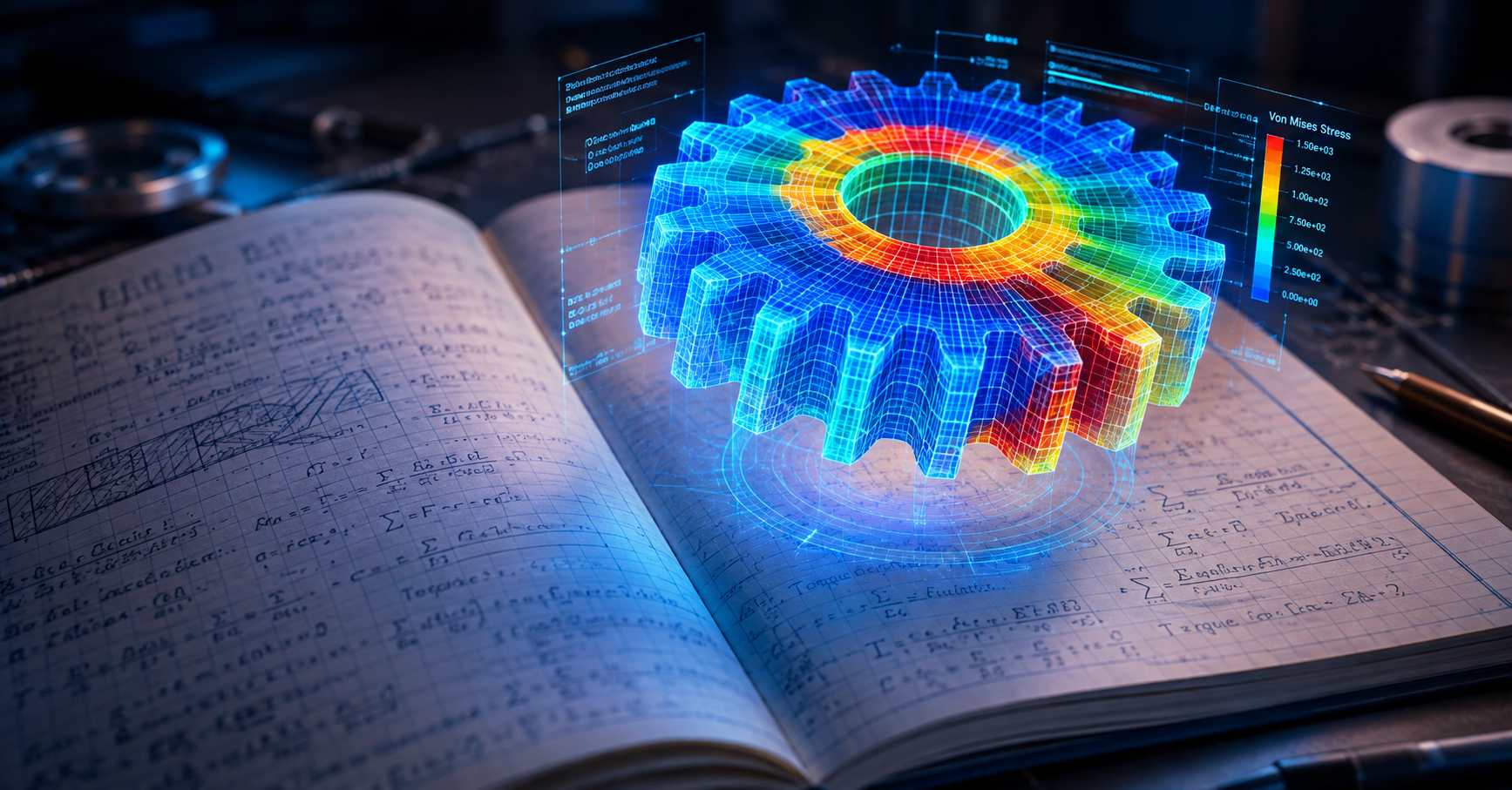
For decades, the trusty engineer’s notebook and Roark’s Formulas for Stress and Strain have been the bedrock of mechanical design. There is a profound comfort in crunching the numbers manually to predict how a steel beam will bend under a static load. But what happens when your design isn’t just a simple beam?
In modern manufacturing, innovation rarely fits into a standard equation. As project leads and mechanical designers push the boundaries of efficiency, they are incorporating organic shapes, advanced composites, and extreme operating environments. Relying solely on manual math for these modern marvels isn’t just inefficient—it is a massive liability.
If you have ever found yourself adding a massive “factor of safety” just because you weren’t entirely sure how a part would behave, you have already hit the ceiling of traditional methods. Here is exactly when you need to step beyond hand calculations and embrace Finite Element Analysis (FEA) to validate your designs safely and cost-effectively.
TL;DR / Key Takeaways:
-
Hand calculations are foundational but fail when evaluating non-linear behaviors, organic shapes, or dynamic forces.
-
Complex geometries and multi-axial loading require FEA to accurately predict stress concentrations and prevent catastrophic failure.
-
Over-engineering costs money. FEA allows for aggressive weight and material optimization without sacrificing safety.
-
Virtual simulation accelerates time-to-market by drastically reducing the need for multiple physical prototyping rounds.
The Comfort Zone: What Hand Calculations Do Best
Before we dismiss manual engineering calculations, we must acknowledge where they shine. Traditional equations are perfect for initial sizing, sanity checks, and analyzing standardized components like simple trusses or pressure vessels. They are incredibly fast and require zero computational power.
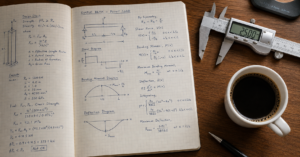
If you are a plant manager looking to quickly estimate the load capacity of a standard steel column, manual math is your best friend. It provides a baseline understanding of the physics at play. However, problems arise when designers treat these baseline estimations as final validation for complex, real-world systems.
The Breaking Point: 5 Signs You Have Outgrown Manual Math
When does a calculator stop being enough? If your project involves any of the following scenarios, investing in engineering simulation is no longer optional.
1. You Are Dealing with Complex Geometries
Standard formulas assume standard shapes: circles, squares, and uniform cylinders. The moment your design includes organic curves, asymmetrical cutouts, or varying wall thicknesses, manual math breaks down.
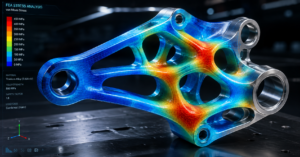
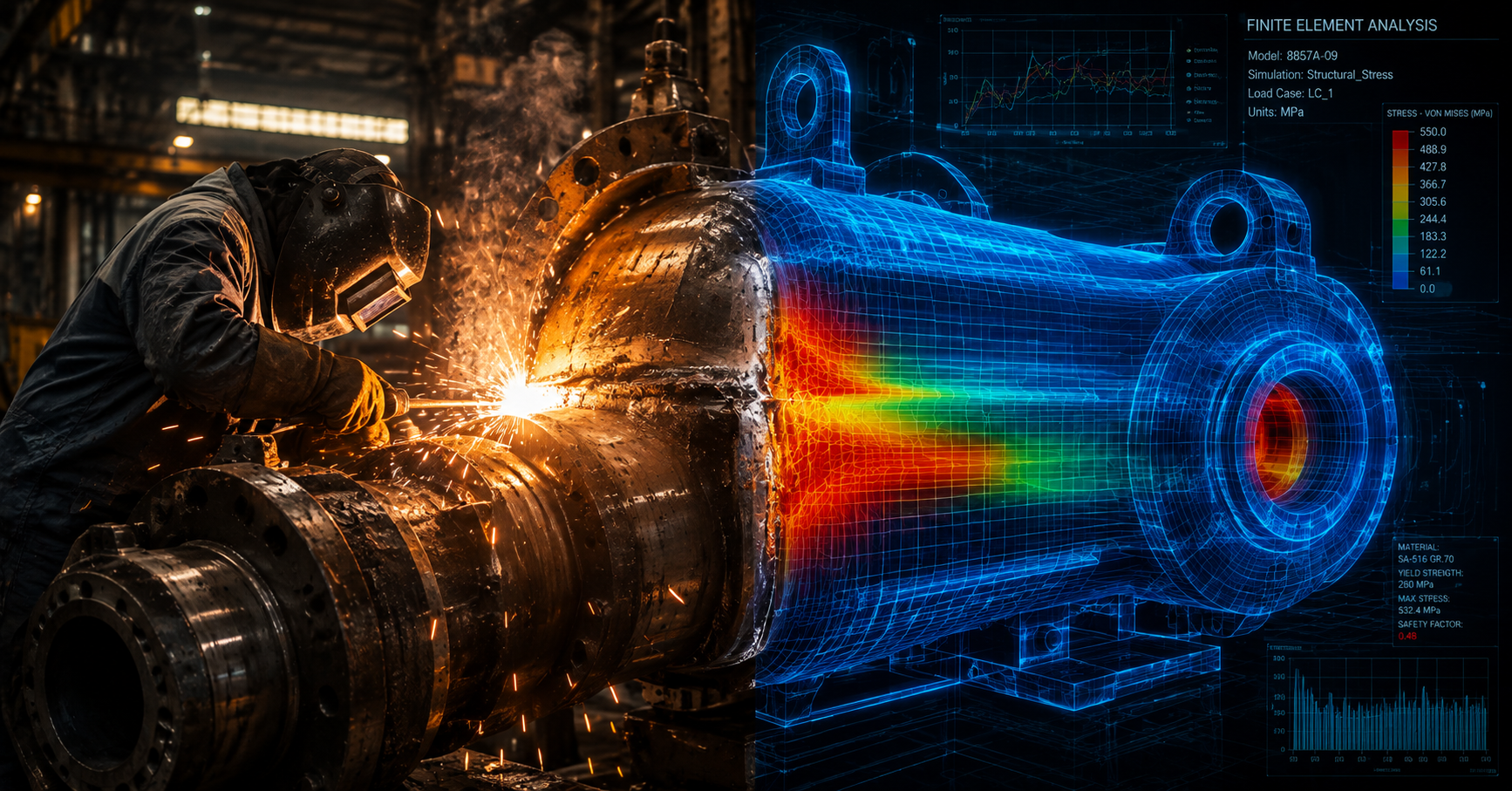
FEA excels here by breaking down these complex geometries into millions of tiny, manageable elements. It accurately maps exactly how stress flows around awkward corners and non-standard holes. Without virtual simulation, these geometric anomalies become hidden weak points waiting to fail.
2. Your Components Face Multi-Axial Loading
In a textbook, a force usually pushes down perfectly on a single axis. On a manufacturing plant floor, a component might be twisted, compressed, and heated all at the exact same time. Multi-axial loading creates complex stress states that are mathematically impossible to solve accurately by hand.
FEA software calculates the combined effect of these simultaneous forces. It reveals the true principal stresses and identifies exactly where the material will yield under chaotic, real-world conditions.
3. Non-Standard Materials Are in the Mix
Hand calculations work brilliantly for isotropic materials like standard steel or aluminum, where properties are the same in every direction. But modern design often demands more. If you are using advanced composites, 3D-printed polymers, or hyper-elastic rubbers, standard equations will betray you.
These materials behave non-linearly, meaning their stiffness changes depending on how hard you pull them. Virtual simulation incorporates these complex material models to give you a true picture of deformation and failure points.
4. Weight Optimization is Critical to ROI
To compensate for the uncertainty of hand calculations, engineers historically relied on massive safety factors. They simply made the part thicker, heavier, and more expensive. In today’s competitive landscape, over-engineering destroys profit margins.
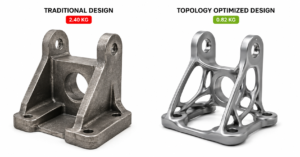
FEA allows designers to confidently strip away excess material where stress is low. You can achieve aggressive lightweighting while maintaining strict safety standards, directly lowering manufacturing and shipping costs.
5. Dynamic and Transient Forces Are at Play
A manual calculation can tell you if a bracket will hold a 100 lb static weight. It cannot easily tell you what happens if that 100 lb weight is dropped on the bracket from three feet in the air.
Vibrations, impacts, and thermal cycling are highly transient—they change rapidly over time. Finite Element Analysis simulates these time-dependent events, ensuring your non-standard components survive the sudden shocks of daily operation.
Hand Calculations vs. FEA: The Engineering Showdown
Understanding the exact threshold for FEA helps project leads allocate resources effectively. Here is a quick breakdown of how these two approaches compare across critical project metrics:
| Feature | Manual Hand Calculations | Finite Element Analysis (FEA) |
| Ideal Use Case | Initial concept sizing and standard shapes | Final validation and complex geometries |
| Geometry Handling | Highly restricted to basic, uniform shapes | Unlimited; handles organic and asymmetrical shapes |
| Loading Conditions | Single-axis, static loads | Multi-axial, dynamic, and thermal loads |
| Material Types | Linear, isotropic (e.g., standard metals) | Non-linear, composites, plastics, and hyper-elastics |
| Cost Implications | Cheap upfront, but high risk of over-engineering | Higher upfront software/time cost, saves massive material costs |
The Hidden Costs of Guesswork in Manufacturing
For manufacturing plant managers, the decision to use FEA often comes down to risk mitigation. Relying on hand calculations for non-standard components usually leads to one of two outcomes: catastrophic failure or severe over-engineering.
If a part is under-designed because a complex stress concentration was missed, you face machine downtime, product recalls, and severe safety hazards. Conversely, if you blindly add material to feel safe, you are bleeding money on every single unit produced. FEA removes the guesswork, providing a visual, data-backed guarantee of performance before a single piece of metal is ever cut.
“Simulation isn’t just about preventing failure; it’s about finding the absolute most efficient way to succeed.”
Bridging the Gap: Integrating FEA into Your Workflow
You do not need to abandon your engineering notebooks entirely. The most successful mechanical designers use hand calculations to quickly iterate in the concept phase. Once the design moves toward physical prototyping, they transition to virtual simulation.
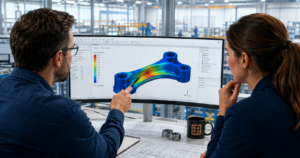
By integrating FEA early in the detailed design phase, you catch critical flaws while they are still cheap to fix. You drastically reduce the number of physical prototypes required, accelerating your overall time-to-market and keeping project leads happy.
Conclusion
Hand calculations will always have a place in mechanical engineering, serving as the critical first step in the design process. However, as designs become more intricate and materials more advanced, manual math quickly reaches its limits.
When you are dealing with complex geometries, multi-axial loading, and the demand for extreme efficiency, Finite Element Analysis is the only reliable path forward. It bridges the gap between theoretical math and real-world survival. By embracing virtual simulation, you protect your bottom line, ensure operational safety, and unlock the freedom to design without limits.
Are you ready to stop over-engineering and start optimizing?
Leave a comment below with your biggest mechanical design challenge, or share this post with your engineering team to start the conversation about upgrading your validation process!
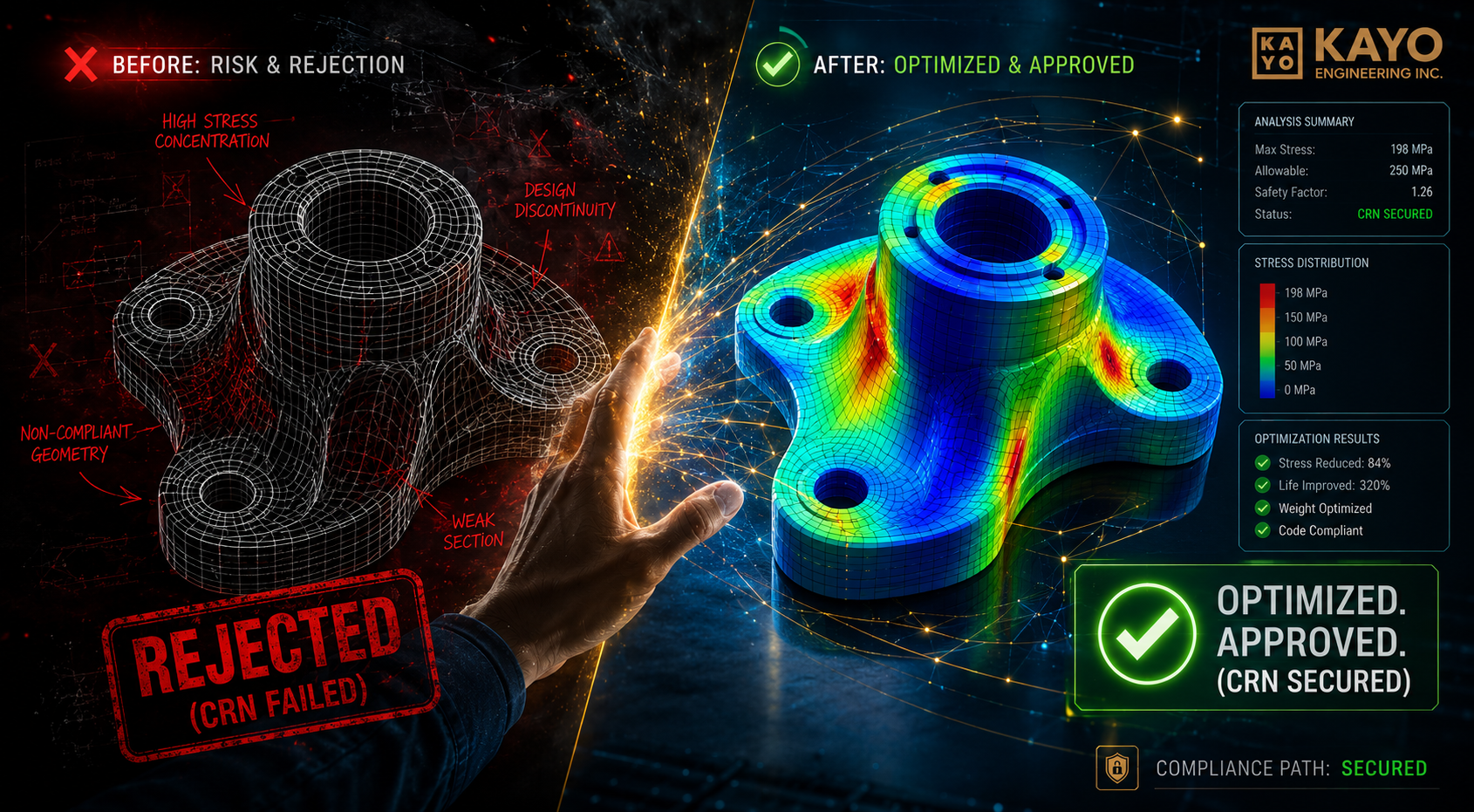
Finite Element Analysis for Complex Geometries: The Ultimate Guide
Standard code calculations form the absolute foundation of mechanical engineering. Governing bodies, such as ASME and CSA, provide highly reliable
The Ultimate Guide to Securing a Canadian Registration Number (CRN) Without the Headaches
Introduction: Why CRN Approval Matters For OEMs, EPC contractors, manufacturers, and industrial facility owners, getting pressure equipment into service in
Industrial Equipment Modification: The Hidden Risks & Solutions
Upgrading your existing machinery seems like the ultimate cost-saving hack. But making structural changes without rigorous engineering validation? That transforms