
Blog
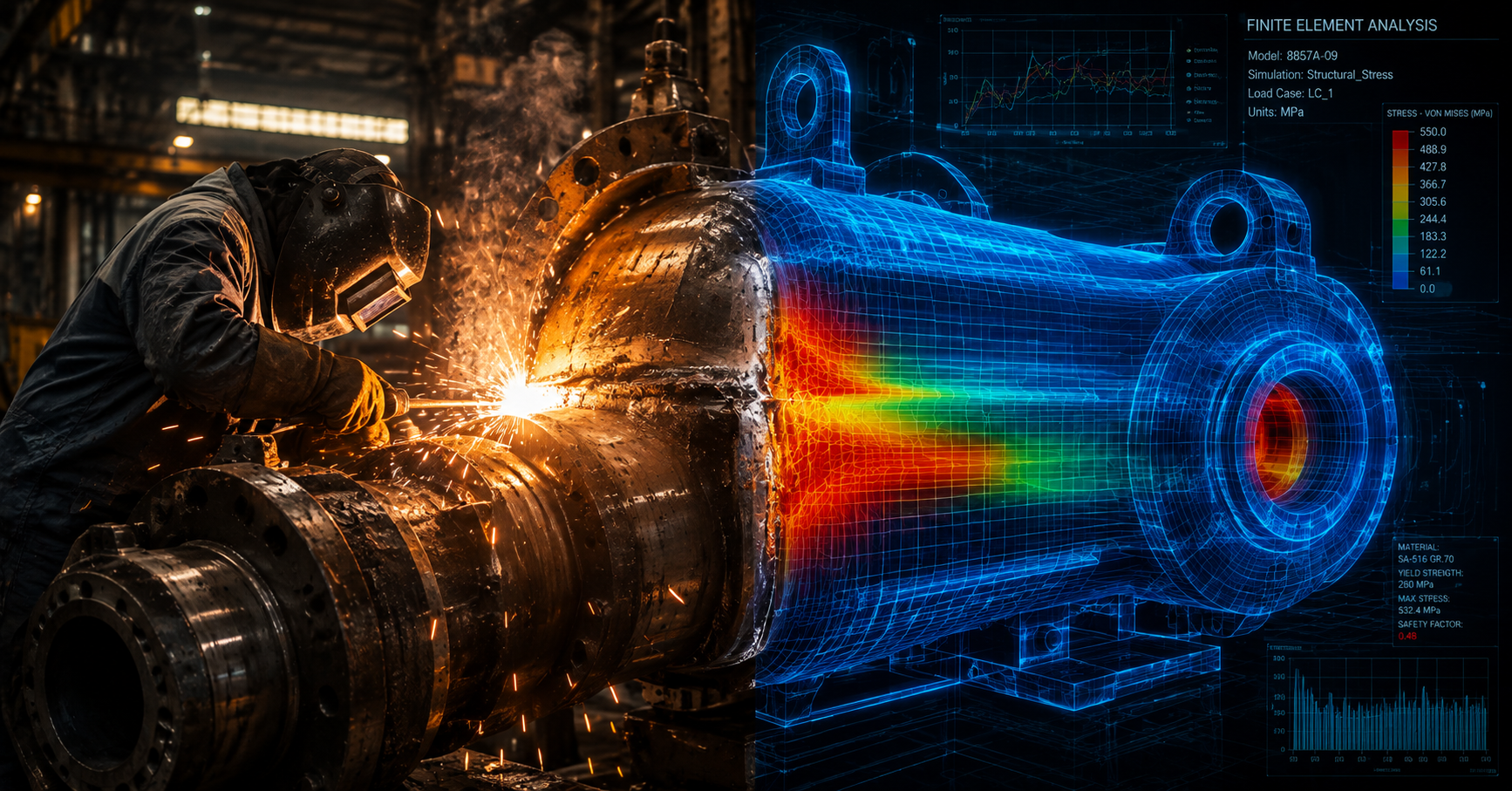
Upgrading your existing machinery seems like the ultimate cost-saving hack. But making structural changes without rigorous engineering validation? That transforms standard equipment into a ticking time bomb.
We completely understand the reality on the ground: facility managers and operations directors are under immense pressure to scale output, clear bottlenecks, and protect profit margins. Whether you are bumping up a crane’s load capacity, retrofitting an aging conveyor for a new product line, or keeping legacy systems alive, modifications happen.
However, altering even a single structural node without computational verification introduces profound, invisible mechanical vulnerabilities. Bypassing professional oversight isn’t a calculated risk—it is an operational gamble that compromises safety, voids warranties, and violates strict regulatory codes.
The Temptation: Why Do Facilities Modify Existing Machinery?
The financial and operational pressures to bypass the Original Equipment Manufacturer (OEM) are massive. Here is why facilities usually take matters into their own hands:
-
Tight CAPEX Budgets: It is incredibly difficult to justify a new $500,000 machine when the old one “just needs a minor tweak.”
-
Severe Downtime Threats: Waiting six to eight months for custom replacement parts from overseas can paralyze a production line.
-
Repurposing Legacy Gear: Facilities often try to force obsolete, older equipment to handle modern, high-capacity applications.
While these drivers make sense for your schedule, they completely ignore structural engineering and material science. A quick patch today can silently trigger a catastrophic failure tomorrow.
The 5 Critical Risks of Unauthorized Modifications
When in-house maintenance crews rely on intuition rather than physics, the consequences are severe. Here is exactly what happens when you skip engineering validation:
| Risk Factor | The Reality of Unauthorized Modifications |
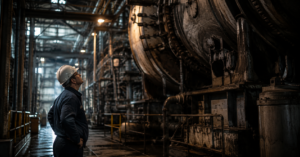
| 1. Structural Failure | Uncalculated changes shift stress distributions. A simple welded bracket can create high-stress zones, accelerating metal fatigue and micro-fracturing. |
| 2. Safety Hazards | Machinery operating outside engineered parameters is lethal. If a retrofitted pressure vessel ruptures, the kinetic energy release puts human lives at direct risk. |
| 3. Regulatory Fines | Skipping engineering reviews violates OSHA (e.g., 1910 standard) and ASME codes. This leads to massive fines and immediate facility shutdowns. |
| 4. Voided Insurance | The second an unauthorized welding arc touches OEM equipment, the warranty is dead. In an accident, forensic adjusters will deny your insurance claims entirely. |
| 5. Unplanned Downtime | Trying to save two weeks of downtime with a quick fix often results in a catastrophic failure that halts production for months while you clean up the wreckage. |
What is an Equipment Modification Assessment?
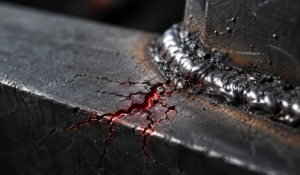
To eliminate these risks, you need an Equipment Modification Assessment before a single piece of steel is cut. This specialized engineering service acts as your technical failsafe.
Because original OEM drawings are frequently lost, engineers use advanced 3D laser scanning to create a highly accurate digital twin of your equipment. From there, they evaluate the metal’s integrity and run the digital model through Finite Element Analysis (FEA).
FEA software simulates exact operational stresses, thermal loads, and vibrational fatigue. It shows engineers exactly how your modification will behave in the real world—ensuring it is mathematically sound.

The Crucial Role of Industrial Load Rating Certification
Whenever you modify material handling equipment, lifting devices, or structural supports, obtaining an updated industrial load rating certification is a strict legal requirement.
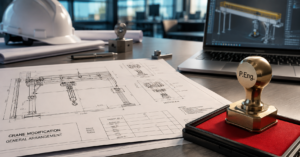
If you add an extension to a crane boom or reinforce a storage silo, the manufacturer’s original Safe Working Load (SWL) is legally dead. Operating under the old rating is a massive liability. An updated certification proves your equipment can handle the new forces, and it must be formally stamped by a licensed Professional Engineer (P.Eng) to be legally recognized.
The Engineering Validation Process: Doing It Right
Executing a safe, compliant machinery upgrade requires a structured approach. Here is the step-by-step framework to optimize your assets safely:
-
Initial Feasibility Study: Engineers review OEM manuals and facility goals to ensure the modification makes mechanical and financial sense.
-
Non-Destructive Testing (NDT): Ultrasonic and magnetic testing verify the existing base metal hasn’t suffered from hidden corrosion or fatigue over the years.
-
Redesigning and Drafting: The changes are digitally engineered into 3D CAD models, generating clear fabrication drawings and Bills of Materials (BOMs).
-
Final Certification: Once fabricated, the equipment is inspected, signed off, and officially stamped by a Professional Engineer.
Real-World Scenarios: The Gamble vs. The Guarantee
The Gamble: A manufacturing plant had their in-house team weld a custom steel extension to a gantry crane to increase its reach. Without computational validation, the added leverage created extreme torsional stress. Three months later, the beam sheared, dropping a two-ton die. The result? An OSHA investigation, a $150,000 fine, and four weeks of halted production.
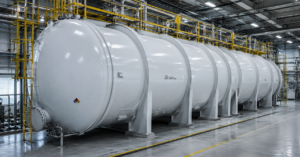
The Guarantee: A chemical facility needed 25% more capacity from a legacy pressurized tank. Instead of guessing, they partnered with an engineering firm. Through thickness analysis and FEA, engineers identified exactly where to add reinforcing ribs. The tank was modified safely, received updated CRN documentation, and boosted production with zero regulatory friction.
Conclusion & Next Steps
Industrial innovation should never come at the cost of workplace safety or regulatory compliance. Extending the life of your machinery is smart business—but executing those changes based on guesswork is a disaster waiting to happen. Professional engineering oversight guarantees your equipment will perform reliably under peak operational stress.
If your facility has recently altered legacy machinery, or if you are planning an upcoming upgrade, do not leave your structural integrity to chance. Contact the expert team at KAYO Engineering today to schedule a comprehensive equipment modification assessment. Ensure your operations remain safe, profitable, and fully code-compliant.
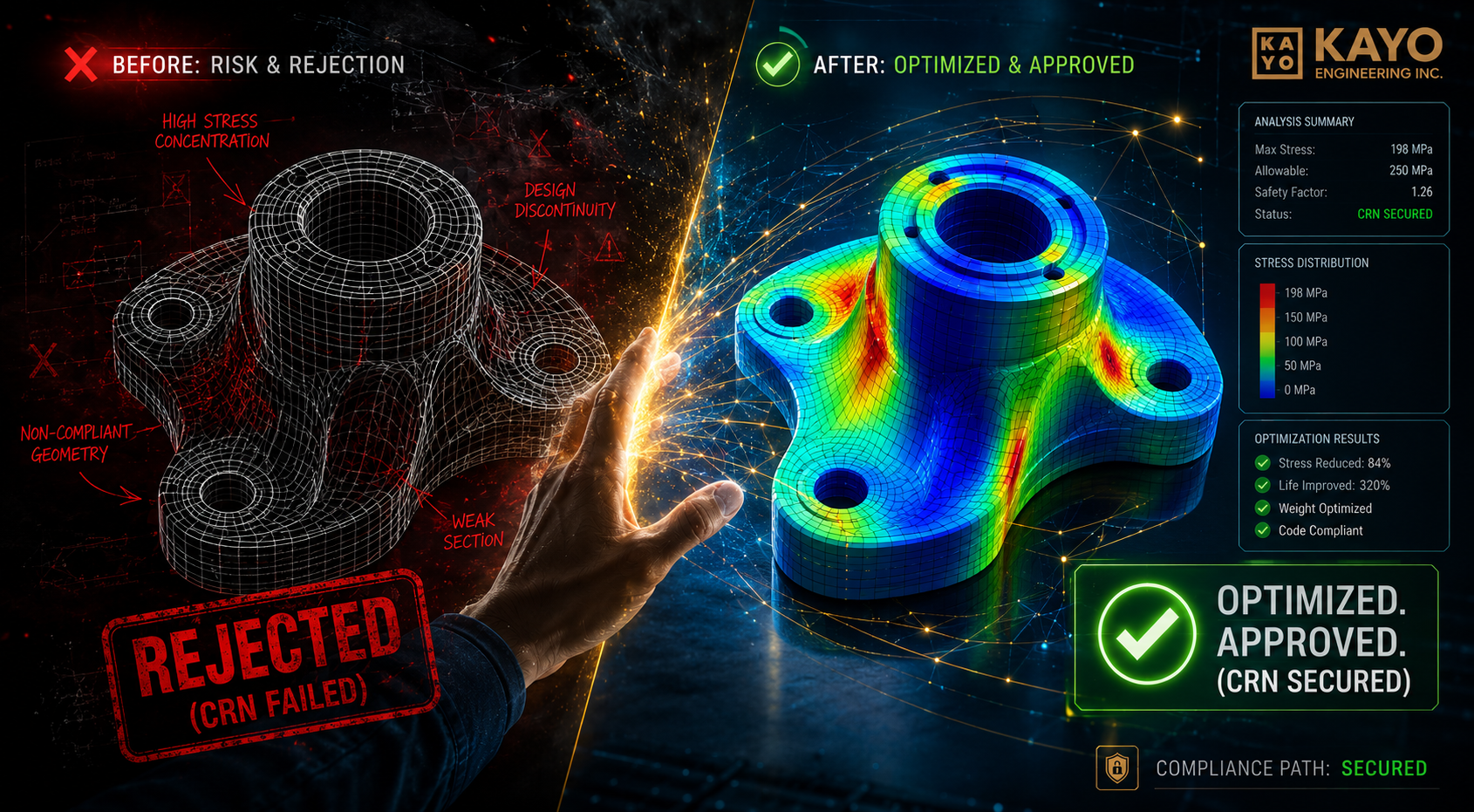
Finite Element Analysis for Complex Geometries: The Ultimate Guide
Standard code calculations form the absolute foundation of mechanical engineering. Governing bodies, such as ASME and CSA, provide highly reliable
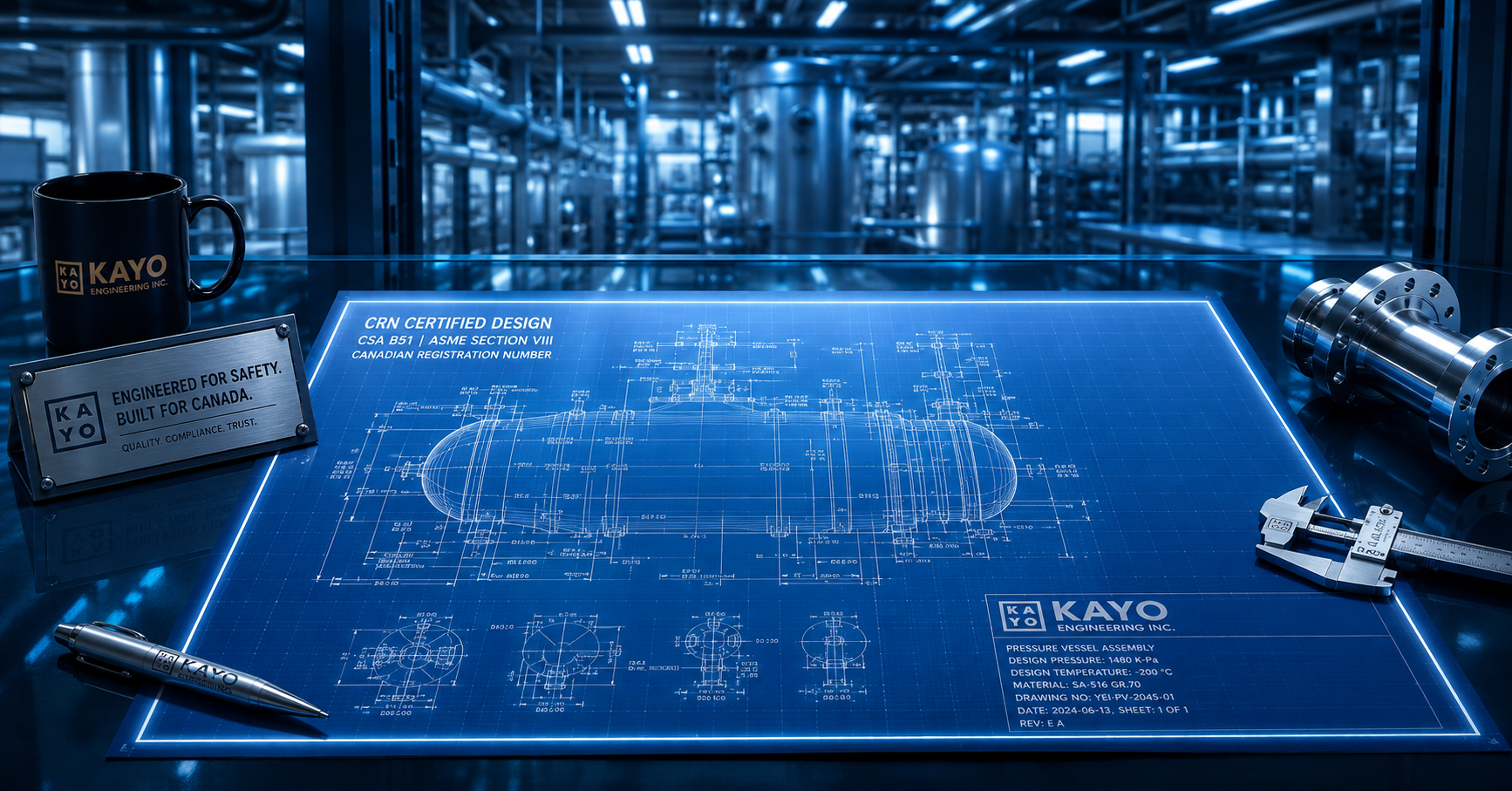
The Ultimate Guide to Securing a Canadian Registration Number (CRN) Without the Headaches
Introduction: Why CRN Approval Matters For OEMs, EPC contractors, manufacturers, and industrial facility owners, getting pressure equipment into service in

Live Leak Sealing: Repair Pressurized Pipeline Leaks Without Plant Shutdowns
Every year, industrial facilities lose millions—sometimes billions across the industry—because of one preventable problem: unplanned shutdowns. Even a small leak