
Blog
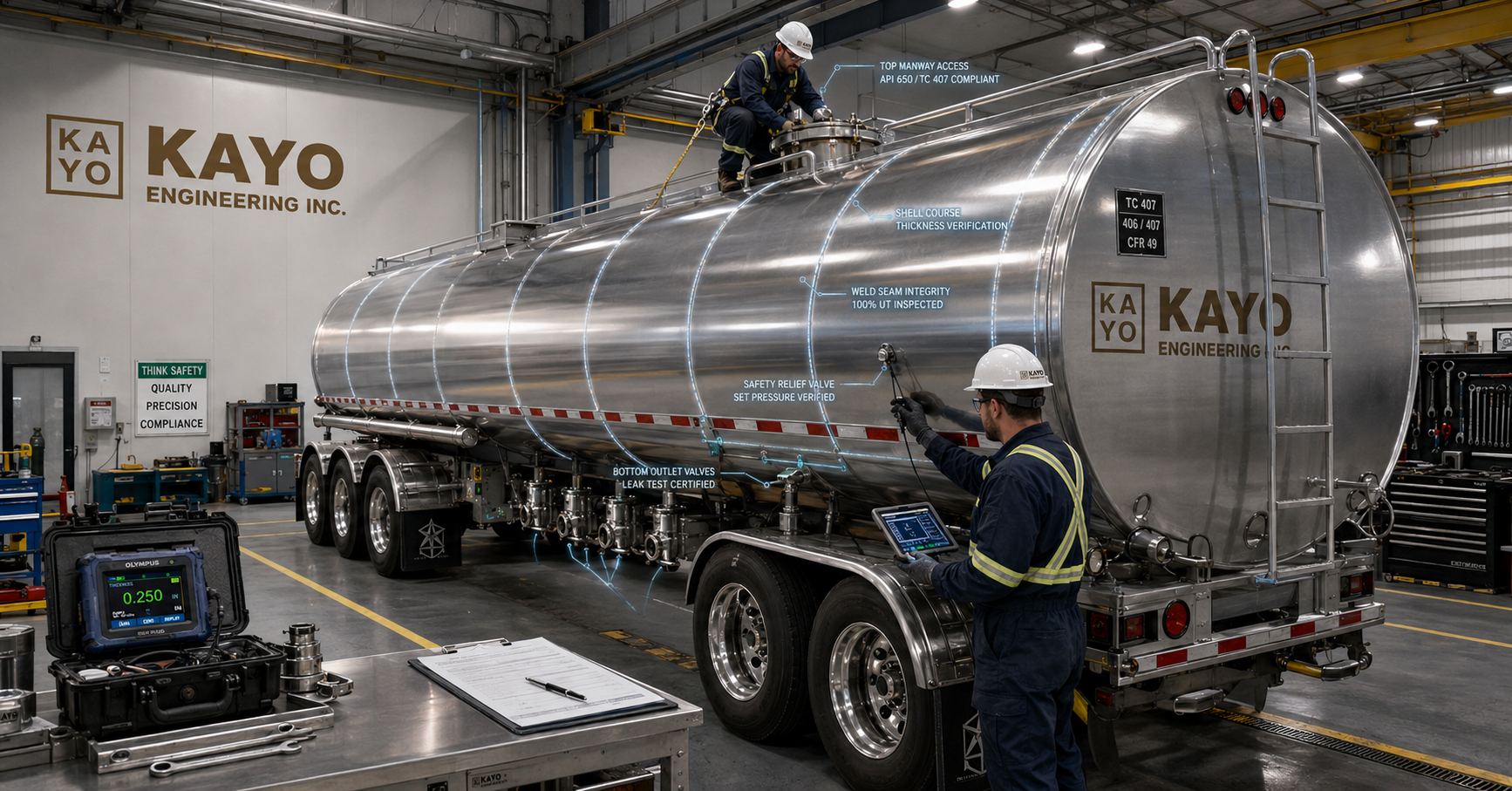
Navigating Transport Canada’s strict legal requirements for manufacturing, assembling, or repairing highway tanks often leads to costly delays and compliance headaches. Facility managers and business owners frequently find themselves buried in complex regulatory codes, struggling to interpret exactly what inspectors demand. A single missing document or an improperly formatted Quality Control (QC) manual can trigger immediate application rejections, halting your operations and draining your resources.
You need a clear, structured path through the regulatory maze. This guide breaks down the exact steps required to secure your CSA B620 facility registration. We detail the technical specifications, the mandatory testing protocols, and the exact documentation you need to bypass bureaucratic red tape and keep your facility running legally.
What is CSA B620 Facility Registration?
The CSA B620 standard dictates the rules for highway tanks and TC portable tanks used to transport dangerous goods across Canada. Transport Canada strictly enforces this standard through the Transportation of Dangerous Goods (TDG) Regulations.
If your facility interacts with these specialized tanks, you cannot operate on a “good faith” basis. You must hold an active, formal registration with Transport Canada. Operating without this certification exposes your business to severe financial penalties, failed audits, and immediate facility shutdowns.
Transport Canada uses the CSA B620 framework to ensure public safety. Highway tanks carry highly volatile, corrosive, or flammable materials. A structural failure on a public highway results in catastrophic environmental and human consequences. Facility registration proves to the government that your business possesses the right tools, the correct procedures, and the qualified personnel to handle these dangerous goods vessels safely.
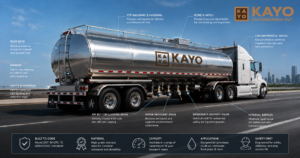
Who Needs to Register? Understanding the Scope of Work
Transport Canada does not issue a blanket registration. Your facility is registered for a specific “Scope of Work.” You must declare exactly what activities you intend to perform.
Manufacturing This covers the fabrication of a brand-new highway tank or TC portable tank from scratch. Manufacturers must follow rigorous design specifications, material tracing, and initial testing protocols before a tank ever sees a truck chassis.
Assembly Assembly involves taking a manufactured tank and mounting it onto a truck chassis or trailer frame. This includes installing the piping, valves, and pumping systems. Even if you buy a fully compliant tank from a manufacturer, you must be registered as an assembler to put it on wheels.
Modification Any change that affects the tank’s structural integrity, its pressure rating, or its original design specifications counts as a modification. Changing the type of valves, altering the piping configuration, or adding structural supports requires registered modification capabilities and sign-off from a Design Engineer.
Repair Repair work involves fixing damage to the pressure-retaining envelope of the tank. This includes welding patches over cracks, replacing damaged baffles, or fixing structural mounts. Because repair work involves welding on vessels that carry dangerous goods, it requires strict adherence to approved welding procedures.
Testing and Inspection Even if you do not build or weld tanks, you must be registered to perform mandatory periodic safety inspections. Facilities that offer commercial tank testing services must maintain calibrated equipment and employ highly trained inspectors capable of identifying microscopic defects.
Types of Highway Tanks Covered Under CSA B620
The CSA B620 standard categorizes tanks based on their design pressure and the specific hazardous materials they carry. Your facility must specify which tank classes it intends to service.
TC 406: Petroleum Products
These are non-pressurized (or very low pressure) aluminum tanks primarily used for transporting gasoline, diesel, and aviation fuel. They feature an elliptical shape to keep the center of gravity low. Facilities working on TC 406 tanks must specialize in aluminum welding and vapor recovery systems.
TC 407: Chemical Transport
TC 407 tanks handle mild chemicals, solvents, and combustible liquids. They operate at low pressure and are typically constructed from stainless steel. Their circular cross-section allows them to handle slightly higher internal pressures than the TC 406.
TC 412: Corrosive Liquids
Built to haul aggressive acids and highly corrosive chemicals, TC 412 tanks feature relatively small diameters and thick steel walls. They often require specialized internal linings (like rubber or fiberglass) to prevent the cargo from eating through the metal. Facilities servicing these tanks must understand lining inspection protocols.
TC 331: Compressed Gases
These heavy-duty, high-pressure spherical or cylindrical tanks transport liquefied compressed gases like propane and anhydrous ammonia. Because of the extreme internal pressures, any repair or modification requires flawless welding and intense non-destructive examination (NDE).
TC 338 & TC 341: Cryogenic Liquids
These tanks transport ultra-cold liquids like liquid nitrogen, oxygen, or argon. They function like giant thermos bottles, featuring an inner tank, an outer jacket, and a vacuum-sealed insulation layer in between. Servicing cryogenic tanks requires specialized knowledge of vacuum testing and specialized materials that do not become brittle at extreme negative temperatures.
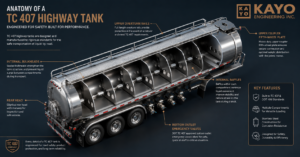
The Critical Testing Codes: V, I, P, K/L, T, UC
When a facility is registered for testing and inspection, it must master a specific alphabet of codes. Transport Canada uses these letters to denote the required periodic tests. Your QC manual must detail exactly how your personnel execute each test.
Facilities performing these tests must maintain pristine calibration records for their pressure gauges and ultrasonic thickness meters. A failed calibration audit immediately invalidates your testing registration.
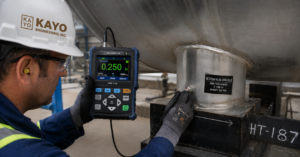
The Backbone of Compliance: Your Quality Control (QC) Manual
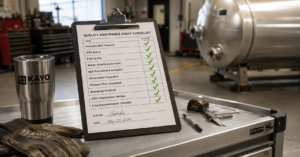
Your Quality Control (QC) manual is the single most important document in your facility. Transport Canada does not just glance at this manual; they scrutinize it. It cannot be a generic template downloaded from the internet. It must precisely reflect your actual shop-floor operations.
Document Control
Your manual must outline exactly how you control revisions. If a drawing changes, how do you ensure the welder on the floor gets the new blueprint and throws away the old one? Transport Canada wants to see a foolproof system that prevents personnel from working off outdated standards.
Material Control
If you are repairing a high-pressure TC 331 tank, you cannot use scrap metal lying around the shop. Your QC manual must dictate how you purchase, receive, inspect, and track raw materials. Every piece of steel and every welding rod must have traceable Mill Test Reports (MTRs) linking it back to the original foundry.
Non-Conformance Handling
Mistakes happen. A weld might fail an X-ray test, or a valve might fail a pressure test. Your QC manual must define what happens next. How is the defective item segregated? Who authorizes the rework? How is it re-tested? Transport Canada looks for facilities that actively catch and document their own errors.
Measuring and Test Equipment
You must maintain a master log of every pressure gauge, torque wrench, and testing device in your facility. The manual must dictate calibration frequencies and state who is responsible for tagging equipment out of service when its calibration expires.
The Role of the Design Engineer and Design Agency
CSA B620 prohibits mechanics and welders from improvising repairs or structural changes. Any modification, repair, or new manufacturing requires formal engineering oversight.
The Design Agency
A Design Agency is a registered entity recognized by Transport Canada. Your facility must either employ a registered Design Agency internally or establish a formal contract with an external one. The Design Agency assumes legal liability for the structural safety of the tank.
The Design Engineer
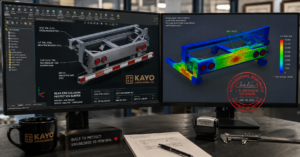
Within the Design Agency, a specific registered Design Engineer must review and stamp all drawings, calculations, and repair procedures. If a tank develops a crack in the shell, the Design Engineer must write a specific, step-by-step repair procedure detailing the weld prep, the filler metal, and the post-weld inspection requirements.
Partnering with an external engineering firm is often the most cost-effective route for repair and assembly facilities. Kayo Engineering provides fully registered Design Agency services, seamlessly integrating with your facility’s QC manual to provide rapid turnaround on approved repair procedures and structural modifications.
Personnel Training and Qualifications
Transport Canada registers the facility, but compliance relies entirely on the individuals holding the tools. Your registration mandates strict, documented qualifications for specific roles.
Welding Qualifications
Welding on a dangerous goods vessel requires top-tier certification. Depending on the tank material, welders must hold valid tickets under ASME Section IX (for pressurized vessels) or CSA W47.1/W47.2 (for structural and aluminum welding).
Your facility must maintain a specific Welding Procedure Specification (WPS) for every type of weld performed. When a welder joins two pieces of metal, they must follow the WPS exactly—dictating the heat input, the travel speed, and the shielding gas. The facility must log every welder’s continuity, proving they have used that specific welding process within the last six months to keep their ticket active.
Non-Destructive Examination (NDE)
Visual inspection of a weld is rarely enough. Depending on the repair, the standard requires Non-Destructive Examination (NDE) to look inside the metal for hidden defects. This includes:
-
Radiography (X-Ray): Taking pictures through the steel to find internal voids.
-
Ultrasonic Testing (UT): Bouncing sound waves through the metal to detect cracks.
-
Magnetic Particle Testing (MT): Magnetizing the steel and applying iron dust to reveal surface cracks.
-
Liquid Penetrant Testing (PT): Using bright dyes to highlight microscopic surface flaws on non-magnetic metals like aluminum.
Personnel performing NDE must hold certifications from recognized bodies, such as CGSB (Canadian General Standards Board) or ASNT (American Society for Nondestructive Testing). Your QC manual must clearly state who is authorized to interpret these test results.
The Transport Canada Application and Audit Process
Getting your registration is not as simple as paying a fee and mailing a form. It is a rigorous vetting process that tests your facility’s readiness.
1. The Gap Analysis
Before applying, you must conduct a brutal internal audit. Compare your current operations against the latest edition of the CSA B620 standard. Identify where your documentation falls short, where your training is lapsed, and where your equipment calibration is missing.
2. Manual Submission
You submit your completed QC manual, your application forms, and your Design Agency designation to Transport Canada. A regulatory review officer will read your manual line-by-line. If they find contradictions, missing clauses, or outdated standard references, they will reject it and send it back for revisions. This back-and-forth can delay registration by months.
3. The On-Site Audit
Once your manual is approved on paper, Transport Canada may dispatch an inspector to your facility. This is not a friendly walk-through. The inspector will demand to see your calibration logs, interview your welders, and ask your inspectors to demonstrate a thickness test. They will pull a random repair file from your cabinet and track the paperwork from the initial work order to the final Design Engineer sign-off. If your floor practices do not match your manual, you fail.
4. Renewal Cycles
Registration is not permanent. Facilities must renew their registration periodically (usually every three years). Transport Canada expects your QC manual to evolve. If the CSA B620 standard updates, your manual must be updated to reflect the new rules. Stagnant facilities lose their registration during the renewal process.
Common Pitfalls That Lead to Application Rejection
Understanding where others fail helps you avoid the same traps. Transport Canada rejects applications for highly predictable reasons.
-
Copy-Paste QC Manuals: Buying a generic manual and doing a “find and replace” with your company name never works. Regulators spot these instantly. If your manual claims you have a dedicated “Quality Assurance Manager” but your shop only employs three people, the regulator knows the manual is a fiction.
-
Expired Welder Logs: Welders must maintain continuous logs. If a welder hasn’t logged a specific process (like TIG welding aluminum) for over six months, their qualification expires. Submitting expired welder tickets guarantees a rejection.
-
Vague Testing Procedures: Stating “We pressure test the tank” is insufficient. The manual must dictate the exact fluid used, the hold time, the pressure increments, the location of the gauges, and the safety perimeter established around the tank during the test.
-
Unregistered Engineers: Assuming any local mechanical engineer can sign off on a tank repair is a fatal error. The engineer MUST be officially registered with Transport Canada as a CSA B620 Design Engineer.
Streamlining Your Registration with Kayo Engineering
Attempting to navigate Transport Canada’s regulatory framework alone drains internal resources, frustrates staff, and halts production. Writing a compliant QC manual from scratch requires hundreds of hours of highly technical writing.
Kayo Engineering eliminates the guesswork. We act as your dedicated compliance partner, handling the heavy lifting so you can focus on servicing vehicles and generating revenue.
Custom QC Manual Drafting We do not use generic templates. Our compliance team conducts a thorough interview process with your shop managers to understand exactly how your facility operates. We then write a custom, highly detailed QC manual that meets every Transport Canada requirement while remaining practical for your floor staff to actually follow.
Registered Design Agency Services Stop hunting for qualified engineers. Kayo Engineering provides direct access to fully registered CSA B620 Design Engineers. We supply the stamped drawings, the approved repair procedures, and the technical oversight required to keep your repair and modification operations completely legal.
Audit Preparation and Support We do not just hand you a manual and walk away. We help you implement the systems. We train your staff on the paperwork, audit your calibration logs, and conduct mock inspections before Transport Canada ever steps foot on your property.
Secure Your Facility’s Future Today
Compliance is not an option; it is the foundation of your business. Delays in your CSA B620 registration cost you clients, sideline your equipment, and expose you to devastating legal liabilities. Don’t risk a rejected application or a failed audit due to a paperwork technicality.
Take control of your compliance process. Let Kayo Engineering handle the regulatory heavy lifting, draft your bulletproof QC manual, and supply the engineering oversight you need.
Ready to secure your Transport Canada registration without the frustration? Contact the compliance experts at Kayo Engineering today to schedule your initial facility assessment and get your application on the fast track to approval.
Breathing New Life into Legacy Equipment: The Hidden Power of Reverse Engineering
What happens when an important piece of industrial equipment has been working for 20 or 30 years, but the company
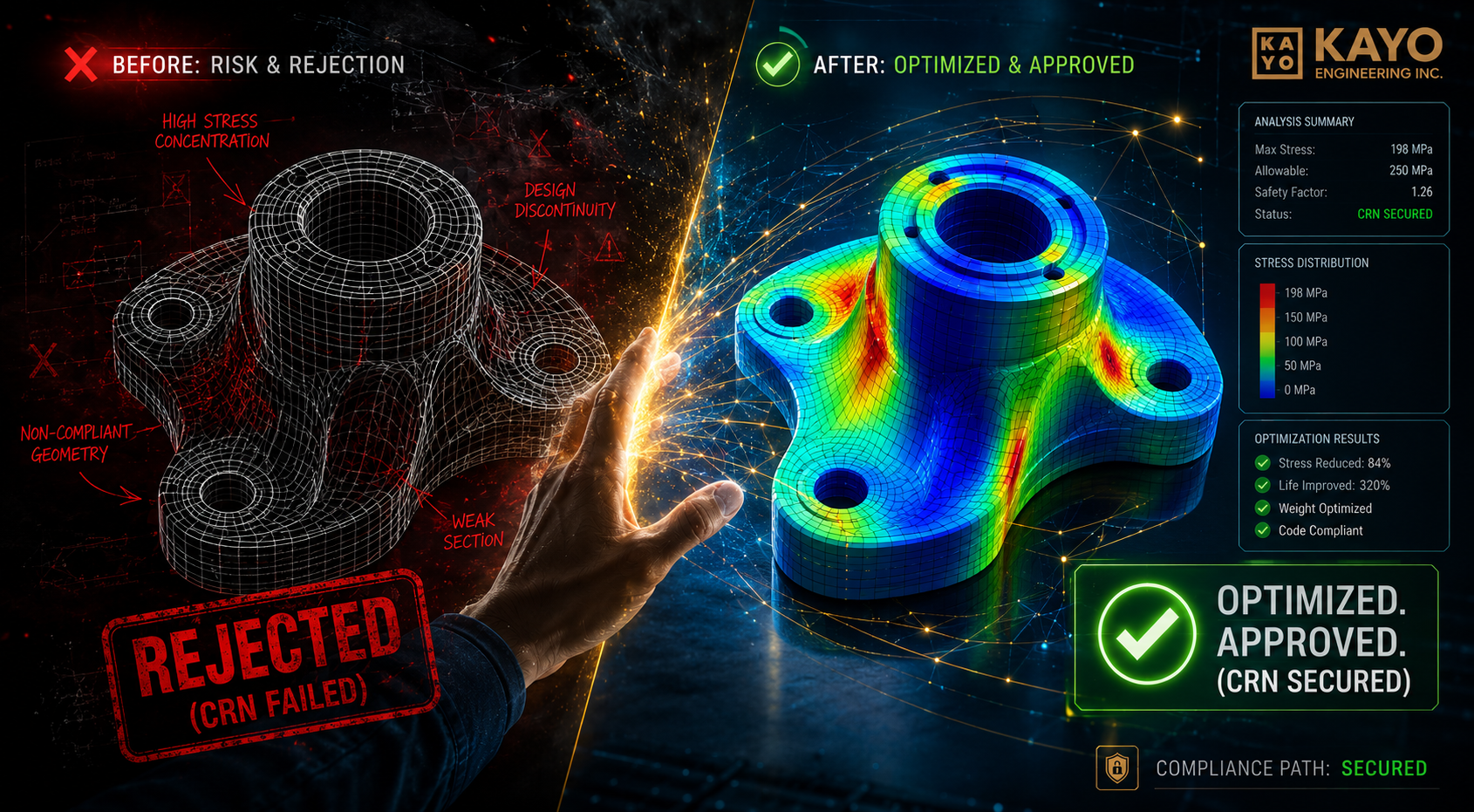
Finite Element Analysis for Complex Geometries: The Ultimate Guide
Standard code calculations form the absolute foundation of mechanical engineering. Governing bodies, such as ASME and CSA, provide highly reliable
The Ultimate Guide to Securing a Canadian Registration Number (CRN) Without the Headaches
Introduction: Why CRN Approval Matters For OEMs, EPC contractors, manufacturers, and industrial facility owners, getting pressure equipment into service in