
Blog
What happens when an important piece of industrial equipment has been working for 20 or 30 years, but the company that made it is no longer in business?
The problem can get even harder when the original drawings are missing and replacement parts are no longer available.
For many industrial companies, the first solution is to replace the equipment.
But is replacement always necessary?
Not necessarily.
An older machine may still be strong, reliable, and useful. It may have years of service left. The real problem may be the lack of engineering information.
This is where reverse engineering legacy equipment can help.
Reverse engineering allows engineers to study an existing machine or component and recreate the information needed to understand, maintain, repair, or manufacture it.
Using inspection, precise measurements, 3D scanning, CAD modeling, material evaluation, and engineering analysis, an old physical asset can become a documented digital asset.
In simple terms, the equipment may be old, but its engineering information can be brought up to date.
Key Takeaways
- Reverse engineering can help extend the useful life of legacy equipment.
- Missing drawings and CAD models can be recreated from existing components.
- 3D scanning can capture complex shapes quickly and accurately.
- Reverse engineering can support the manufacture of obsolete replacement parts.
- Accurate engineering documentation can make future maintenance easier.
- Existing equipment can sometimes be upgraded instead of completely replaced.
- Engineering validation is important for critical and safety-related components.
- The goal is not simply to copy an old part. The goal is to recover useful engineering knowledge.
What Is Reverse Engineering in Mechanical Engineering?
Reverse engineering is the process of studying an existing physical component or machine to understand how it was made, how it works, and how it can be accurately documented.
Traditional engineering usually starts with a design.
Engineers create drawings and CAD models first. The physical component is then manufactured from those designs.
Reverse engineering works in the opposite direction.
Engineers start with the physical component.
They inspect it, measure it, scan it, and study its construction. They then use that information to recreate a digital model and engineering documentation.
A reverse engineering project may include:
- Inspecting the existing equipment.
- Measuring important dimensions.
- Capturing complex geometry.
- Using 3D scanning when appropriate.
- Identifying materials and components.
- Creating a 3D CAD model.
- Preparing engineering drawings.
- Performing engineering calculations.
- Validating the reconstructed design.
- Supporting replacement-part manufacturing.
The exact process depends on the equipment and the purpose of the project.
For a simple mechanical part, the process may be relatively straightforward.
For pressure equipment or safety-critical machinery, much more engineering work may be required.
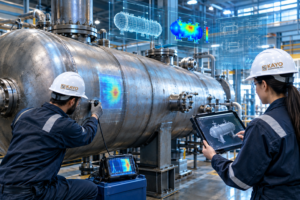
Why Does Legacy Equipment Become Difficult to Maintain?
Industrial equipment can last for decades.
Unfortunately, the information around that equipment may not last as long.
Manufacturers close.
Companies merge.
Product lines disappear.
Experienced engineers retire.
Paper drawings get lost.
Old CAD files become difficult to open.
Suppliers stop making specialized components.
Over time, a company may still have a working machine but very little reliable information about it.
This creates several common problems.
Missing Original Drawings
Older equipment was often designed using paper drawings or older CAD systems.
Those documents may no longer be available.
Without accurate drawings, manufacturing a replacement component becomes much harder.
Even a small dimensional mistake can cause problems with fit, alignment, or operation.
The Original Manufacturer Is Gone
Sometimes the OEM no longer exists.
In other cases, the manufacturer may still operate but no longer support a particular machine or component.
This leaves the equipment owner with fewer options.
They may need to search for used parts or ask another manufacturer to produce a custom replacement.
Replacement Parts Are Difficult to Find
Some legacy machines use specialized components that were produced decades ago.
Once production stops, those parts can become difficult to source.
Even when a used part is available, its condition may be uncertain.
Reverse engineering provides another possible solution.
Engineers can study the existing component and develop the information needed to manufacture a replacement.
The Original Design Intent Is Unknown
A physical component tells us what exists.
It does not always tell us why it exists.
For example, a particular thickness may have been selected because of a load requirement. A specific material may have been chosen because of temperature or corrosion.
That is why professional reverse engineering involves more than copying dimensions.
Engineers may need to investigate the operating conditions and original design requirements as well.
The Hidden Value of Reverse Engineering
The real value of reverse engineering is not just the final drawing.
It is the engineering knowledge created during the process.
Imagine a company has an industrial component that has been in service for 25 years.
There are no reliable CAD files.
There is no manufacturing drawing.
The original supplier is gone.
Before reverse engineering, the company has a physical component and limited information.
After reverse engineering, the company may have:
- A 3D CAD model
- Manufacturing drawings
- Accurate dimensions
- Material information
- Assembly information
- Inspection records
- Engineering calculations
- Replacement-part information
- Digital equipment documentation
That information can be useful for many years.
It can also make future maintenance and repair work much easier.
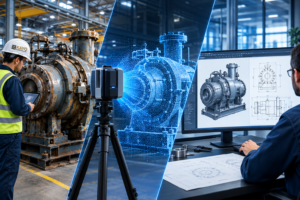
7 Benefits of Reverse Engineering Legacy Equipment
Reverse engineering can provide value beyond simply replacing one old part.
Here are seven important benefits.
1. Extend the Useful Life of Existing Equipment
Replacing an entire machine can be a major project.
It may require new foundations, electrical work, piping changes, training, commissioning, and production downtime.
But what if the machine itself is still working well?
In that situation, replacing the entire asset may not be the only option.
Reverse engineering can help engineers recreate obsolete components and support continued maintenance.
This can allow companies to get more value from equipment they already own.
Of course, the equipment must still be suitable for its intended service.
Its condition, safety, performance, and applicable requirements should be evaluated before deciding to continue its use.
2. Recreate Missing Engineering Drawings
Missing drawings are one of the most common problems with legacy equipment.
A company may have a physical component but no accurate drawing for it.
Reverse engineering can help recreate that documentation.
Engineers can develop:
- Part drawings
- Assembly drawings
- Section views
- Dimensions
- Tolerances
- Mounting details
- Interfaces
- CAD models
This gives the organization a reliable digital reference.
The next time the component needs to be repaired or replaced, engineers do not have to start from the physical part again.
3. Manufacture Replacement Parts
One of the most practical uses of reverse engineering is replacement-part development.
Suppose a machine has a critical component that is no longer manufactured.
Engineers can inspect the original part and capture its geometry.
They can then create a CAD model and prepare manufacturing documentation.
Depending on the application, they may also evaluate:
- Material
- Dimensions
- Tolerances
- Surface finish
- Fasteners
- Welding details
- Heat treatment
- Corrosion
- Operating loads
The final replacement should be reviewed based on its intended use.
A replacement component should not automatically be considered acceptable just because it matches the old component’s dimensions.
4. Reduce Equipment Downtime
Downtime can be expensive.
This is especially true when the failed equipment is part of an important production process.
Waiting several weeks for an obsolete OEM component may not be practical.
If accurate engineering documentation already exists, the replacement process can be easier to manage.
Instead of asking:
“Where can we find this old part?”
the company may be able to ask:
“How can we manufacture an approved replacement?”
That is a major change.
Reverse engineering does not eliminate manufacturing or engineering lead times, but it can give the organization a documented starting point.
5. Improve Maintenance Planning
Maintenance teams need reliable information.
They need to know how components fit together, what dimensions matter, and which parts may need replacement.
Reverse-engineered documentation can support:
- Preventive maintenance
- Spare-parts planning
- Inspection programs
- Repair work
- Equipment modifications
- Maintenance training
- Future engineering projects
It can also help maintenance teams communicate more clearly with engineers and manufacturers.
6. Support Equipment Modernization
Reverse engineering does not mean preserving old equipment exactly as it is.
Sometimes the existing machine provides a good foundation for modernization.
Once engineers have an accurate digital model, they can study possible improvements.
Depending on the application, upgrades may include:
- Modern control systems
- New instrumentation
- Improved guarding
- Updated components
- Better monitoring
- Improved support structures
- Easier maintenance
- More efficient mechanical systems
This approach combines the value of existing equipment with modern engineering technology.
7. Preserve Engineering Knowledge
Experienced employees often know things about older equipment that never made it into formal documentation.
They may know:
- Which components fail most often
- How a machine was modified
- Which parts are difficult to replace
- How certain assemblies are installed
- What problems occurred in the past
When those employees leave, some of that knowledge can disappear.
Reverse engineering can help capture part of this knowledge in a more permanent form.
The result is a stronger engineering record for future teams.
Reverse Engineering vs. Replacing the Equipment
Reverse engineering is not always the correct solution.
Some equipment has reached the end of its useful life.
Other equipment may no longer meet production requirements or current safety and regulatory requirements.
In those cases, replacement may be necessary.
However, if the equipment is still useful, reverse engineering may be worth evaluating.
| Consideration | Reverse Engineering | Full Equipment Replacement |
|---|---|---|
| Existing equipment | May remain in service | Replaced |
| Documentation | Recreated or updated | Usually supplied with new equipment |
| Replacement parts | Can support custom manufacturing | Usually sourced through OEM |
| Existing operator knowledge | Retained | New equipment may require training |
| Modernization | Selected upgrades possible | Broad modernization possible |
| Capital investment | May be lower depending on scope | Often significant |
| Downtime | May be limited depending on project | Installation may require substantial downtime |
| Best application | Valuable legacy equipment | End-of-life or unsuitable equipment |
The decision should be based on the equipment’s condition, safety, performance, operating environment, regulatory requirements, downtime, and total lifecycle cost.
How Does the Reverse Engineering Process Work?
A professional reverse engineering project usually follows a structured process.
The exact steps depend on the equipment and the project objective.
Here is a typical approach.
Step 1: Define the Project Goal
The first question is simple:
What does the company need to accomplish?
The goal may be to:
- Recreate a missing drawing
- Manufacture a replacement part
- Create a CAD model
- Modify existing equipment
- Investigate a failure
- Upgrade a machine
- Support an inspection
- Document an obsolete assembly
A clear goal helps determine how much information needs to be collected.
Step 2: Inspect the Equipment
Engineers begin by studying the existing equipment.
They may take photographs, record existing conditions, identify components, inspect interfaces, and measure important areas.
They also look for signs of:
- Wear
- Corrosion
- Previous repairs
- Modifications
- Damage
- Unusual features
This information can be important later in the project.
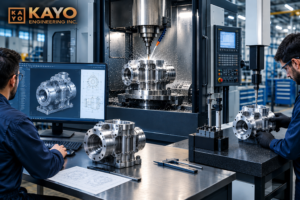
Step 3: Capture the Geometry
The next step is to capture the physical shape of the component.
The appropriate method depends on the size and complexity of the equipment.
Possible methods include:
- Digital calipers
- Micrometers
- Coordinate measuring equipment
- Photogrammetry
- 3D laser scanning
- Structured-light scanning
- Existing drawings
- Photographs
Simple components may be measured manually.
Complex components can benefit greatly from 3D scanning.
Step 4: Build the 3D CAD Model
The measurement and scan data can then be used to develop a 3D CAD model.
The model may include:
- Individual components
- Complete assemblies
- Mounting points
- Interfaces
- Internal geometry
- External geometry
- Complex surfaces
The CAD model becomes a valuable engineering reference.
It can also be used to create manufacturing drawings and support future modifications.
Step 5: Evaluate Materials and Operating Conditions
Geometry is only one part of reverse engineering.
Engineers may also need to understand what the component is made from and how it operates.
Important information may include:
- Material specification
- Operating temperature
- Operating pressure
- Mechanical loads
- Corrosion environment
- Service history
- Welding requirements
- Applicable standards
For some critical components, additional material testing or inspection may be appropriate.
This step is important because two components can look almost identical while having very different material properties.
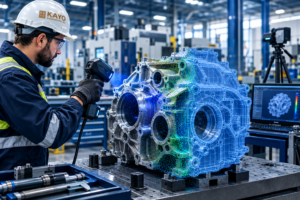
Step 6: Perform Engineering Analysis
This is where reverse engineering becomes more than simple measurement.
A detailed CAD model does not automatically prove that a component is safe or suitable for service.
Depending on the application, engineers may perform:
- Structural calculations
- Stress analysis
- Pressure calculations
- Thermal analysis
- Fatigue evaluation
- Finite element analysis
- Mechanical load analysis
The goal is to determine whether the reconstructed or modified design is appropriate for its intended application.
Step 7: Create Manufacturing Drawings
Once the model has been reviewed, engineers can prepare detailed manufacturing drawings.
Depending on the component, these drawings may include:
- Dimensions
- Tolerances
- Materials
- Surface finishes
- Welding information
- Geometric tolerances
- Fastener specifications
- Engineering notes
- Revision information
A good drawing gives manufacturers the information they need to produce the component consistently.
It also creates a permanent engineering record.
Step 8: Validate the Reconstructed Design
Validation is an important final step.
The CAD model should be checked against the physical equipment and any reliable historical information that is available.
Depending on the project, engineers may verify:
- Critical dimensions
- Interfaces
- Clearances
- Materials
- Loads
- Operating conditions
- Applicable standards
The level of validation should match the importance and risk of the equipment.
Safety-critical equipment requires greater care than a non-critical mechanical component.
Reverse Engineering Is More Than Copying
It is easy to think of reverse engineering as simply copying an old part.
Professional engineering work is more involved.
Copying asks:
“What does this component look like?”
Engineering asks:
“What does this component need to do, what loads does it experience, what materials are required, and what engineering requirements apply?”
That difference matters.
An old component may have experienced wear.
It may have been repaired.
It may have been modified.
It may not even match the original design anymore.
For this reason, engineers should treat the existing equipment as an important source of information, but not automatically assume that every feature represents the original or correct design.
The Role of 3D Scanning in Reverse Engineering
3D scanning has become an important tool for modern reverse engineering.
Traditional tools are still useful, but scanning can make it easier to capture complicated shapes.
A 3D scanner can capture a large number of points across a component’s surface.
This creates a digital point cloud that can be used during CAD development.
3D scanning can be especially useful for:
- Large components
- Complex surfaces
- Irregular shapes
- Difficult-to-access areas
- Legacy machinery
- Existing installations
- Components with unknown dimensions
It can also help engineers compare the actual component with a CAD model.
But a 3D Scan Does Not Answer Every Question
A scan tells engineers about geometry.
It does not automatically determine:
- Material strength
- Design pressure
- Fatigue life
- Original design intent
- Applicable codes
- Safety factors
- Acceptability of a modification
That is why scanning should be considered one part of the engineering process.
3D scanning provides geometric information. Engineering analysis provides context and validation.
When Should You Consider Reverse Engineering?
Reverse engineering may be worth considering if:
- Original drawings are missing.
- The OEM no longer supports the equipment.
- Replacement parts are discontinued.
- A critical component needs to be reproduced.
- Existing equipment is still valuable.
- Legacy machinery needs modification.
- Accurate CAD models are required.
- Maintenance documentation is incomplete.
- An existing system needs modernization.
- Important engineering knowledge needs to be preserved.
One useful question is:
“Is the equipment actually obsolete, or is only the documentation obsolete?”
Sometimes, the answer can change the entire approach to an equipment problem.
Which Industries Use Reverse Engineering?
Reverse engineering can be useful across many industries.
Oil and Gas
Oil and gas facilities often contain equipment that has been operating for many years.
Pumps, piping components, supports, mechanical assemblies, and specialized equipment may require updated documentation or replacement components.
Manufacturing
Production equipment can remain in service for decades.
When original components are discontinued, reverse engineering can help support maintenance and replacement.
Energy
Power-generation facilities often operate large systems for long periods.
Accurate documentation can help with maintenance, inspection, modifications, and replacement-part development.
Transportation
Specialized mechanical components may remain in service long after the original manufacturer has stopped producing them.
Reverse engineering can provide a way to document and reproduce those components.
Mining
Mining equipment operates in demanding environments.
When a specialized component fails, finding a replacement quickly can be important.
Chemical Processing
Chemical facilities may contain older process equipment that requires inspection, documentation, modification, or replacement components.
Industrial Facilities
Large industrial facilities often contain equipment from many manufacturers and different generations.
Reverse engineering can help bring older equipment into a more organized digital engineering system.
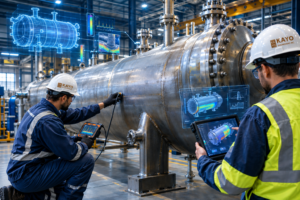
Reverse Engineering Pressure Equipment Requires Extra Care
Reverse engineering becomes especially important when the equipment contains pressure.
A pressure vessel, tank, piping component, or similar system cannot simply be reproduced by copying its outside dimensions.
Engineers may need to evaluate:
- Design pressure
- Design temperature
- Material properties
- Corrosion allowance
- Wall thickness
- Weld details
- Joint efficiency
- Nozzle geometry
- External loads
- Fatigue
- Inspection history
- Applicable codes and standards
The equipment’s actual operating history can also provide valuable information.
For example, engineers may need to understand previous repairs, corrosion, modifications, and inspection results.
The requirements can also vary by equipment type, service, and jurisdiction.
For safety-critical pressure equipment, the work should be performed and reviewed by appropriately qualified engineering professionals.
How Reverse Engineering Can Help Reduce Lifecycle Costs
When companies compare repair, reverse engineering, modernization, and replacement, they should look beyond the initial purchase price.
The total lifecycle cost can include many other expenses.
For example, replacing an entire machine may require:
- New equipment
- Engineering
- Installation
- Electrical changes
- Mechanical modifications
- Operator training
- Commissioning
- Production downtime
Reverse engineering a critical component may involve:
- Inspection
- Measurement
- 3D scanning
- CAD modeling
- Engineering analysis
- Manufacturing
- Installation
The actual cost will depend on the project.
There is no universal rule that reverse engineering will always be cheaper.
However, when an existing machine is still valuable and suitable for service, reverse engineering can be an option worth evaluating before committing to full replacement.
Turning a Physical Asset Into a Digital Asset
One of the biggest long-term benefits of reverse engineering is digital documentation.
Consider the journey:
Physical Equipment → Inspection → Measurement → 3D Scan → CAD Model → Engineering Analysis → Manufacturing Drawing → Digital Asset
The result is much more valuable than a single replacement part.
The company now has engineering information that can support future work.
Years later, if another component needs attention, engineers may already have a digital model and supporting documentation.
That means the organization does not have to rediscover the same information again.
Common Reverse Engineering Mistakes
Even a well-planned project can run into problems if the engineering process is too narrow.
Here are some common mistakes to avoid.
Mistake 1: Measuring Everything Without Identifying Critical Features
Not every dimension has the same importance.
Some dimensions affect fit, alignment, strength, pressure containment, or operation.
Engineers should identify the critical characteristics first.
Mistake 2: Assuming the Existing Part Is Perfect
An old component may have wear or damage.
It may also contain previous repairs or modifications.
Copying it exactly may reproduce problems instead of solving them.
Mistake 3: Ignoring Materials
Two parts can have the same shape but different material properties.
Material selection can affect strength, corrosion resistance, temperature performance, and service life.
Mistake 4: Skipping Engineering Validation
A detailed CAD model can look impressive.
But appearance does not prove performance.
Critical dimensions, materials, loads, operating conditions, and applicable requirements should be reviewed as appropriate.
Mistake 5: Solving Only Today’s Problem
A company may start reverse engineering because one part has failed.
But the project can provide much more value.
The same work can create CAD models, drawings, inspection records, and engineering documentation for future maintenance.
The Future of Legacy Equipment Is Digital
Industrial companies do not always have to choose between keeping old equipment unchanged and replacing everything with new machinery.
There is another option.
Digitize it. Analyze it. Validate it. Modernize it where appropriate.
Modern technologies such as 3D scanning, CAD modeling, simulation, and digital documentation make it easier to bring old equipment into a modern engineering workflow.
The physical machine may be 30 years old.
Its engineering data does not have to be.
With the right engineering approach, legacy equipment can become part of a modern digital asset strategy.
Final Thoughts: Give Legacy Equipment a New Engineering Life
Old equipment is not automatically useless.
In many industrial facilities, legacy machines represent years of investment and proven operational experience.
The bigger challenge may be the information surrounding them.
Original drawings may be gone.
Replacement parts may no longer exist.
Experienced personnel may have moved on.
But the physical equipment can still provide valuable engineering information.
Reverse engineering can help recover that information.
By combining inspection, measurement, 3D scanning, CAD modeling, material evaluation, engineering calculations, and professional validation, companies can create reliable documentation for equipment that was never properly documented in digital form.
The result is more than a new drawing.
It is engineering knowledge that can be used in the future.
That knowledge can support maintenance, replacement-part manufacturing, equipment upgrades, inspections, modernization, and better asset management.
The most important question is not always:
“How old is this equipment?”
A better question may be:
“Is this equipment still valuable, and can we recover the engineering information needed to keep it useful?”
For many legacy assets, that question is worth answering before deciding on complete replacement.
Ready to Unlock the Potential of Your Legacy Equipment?
If your company is dealing with obsolete machinery, missing drawings, discontinued components, or aging mechanical equipment, reverse engineering may provide a practical path forward.
A professional engineering assessment can help determine what information can be recovered, what analysis is required, and whether the existing equipment can be repaired, reproduced, modified, or modernized.
Don’t assume an asset needs to be replaced simply because its documentation is gone.
With the right engineering process, a legacy machine can become a well-documented digital asset with a clearer path for future maintenance and support.
Frequently Asked Questions
What is reverse engineering in industrial equipment?
Reverse engineering is the process of examining an existing physical machine or component to understand its geometry, construction, materials, and function.
Engineers can then use this information to create CAD models, engineering drawings, specifications, and other technical documentation.
When should a company consider reverse engineering?
It may be worth considering when original drawings are missing, the OEM no longer supports the equipment, replacement parts have been discontinued, or an existing machine remains valuable and suitable for continued service.
The decision should also consider safety, equipment condition, performance, regulations, downtime, and lifecycle costs.
Is reverse engineering the same as making a copy?
No.
A simple copy focuses mainly on matching the physical shape.
Professional reverse engineering also considers how the component functions, what loads it experiences, which materials are appropriate, and what engineering requirements apply.
How does 3D scanning help with reverse engineering?
3D scanning captures detailed information about the physical geometry of a component.
The resulting point-cloud data can help engineers develop accurate CAD models, especially when dealing with large, complex, or irregular shapes.
However, scanning only captures geometry. Additional engineering work may be needed to evaluate materials, loads, design requirements, and safety.
Can pressure vessels be reverse engineered?
Yes, but pressure equipment requires additional engineering care.
Engineers may need to evaluate pressure, temperature, material properties, wall thickness, welds, corrosion, external loads, fatigue, inspection history, and applicable codes and standards.
For safety-critical pressure equipment, the work should be performed and reviewed by appropriately qualified engineering professionals.
Can reverse engineering help with obsolete replacement parts?
Yes.
Engineers can inspect an existing component, capture its geometry, develop a CAD model, prepare manufacturing drawings, and evaluate the requirements needed to produce a replacement.
The replacement should be appropriately reviewed and validated for its intended application.
Does reverse engineering always cost less than replacing equipment?
No.
The cost depends on the equipment, project scope, condition, required analysis, manufacturing requirements, and replacement alternatives.
Reverse engineering can be a practical option when an existing asset is still valuable and suitable for service, but each project should be evaluated on its own merits.
What is the biggest benefit of reverse engineering legacy equipment?
One of the biggest benefits is recovering engineering knowledge.
Instead of relying only on a physical machine or the memory of experienced employees, a company can create CAD models, drawings, measurements, inspection records, and other documentation that can support future engineering work.
Conclusion
Legacy equipment does not have to remain a mystery.
With modern reverse engineering methods, engineers can examine physical equipment, capture its geometry, recreate its digital model, evaluate its engineering requirements, and build documentation that supports its future.
The goal is not simply to make an old machine look new.
The goal is to make its engineering information useful again.
And sometimes, that can make all the difference between losing a valuable asset and giving it a new engineering life.
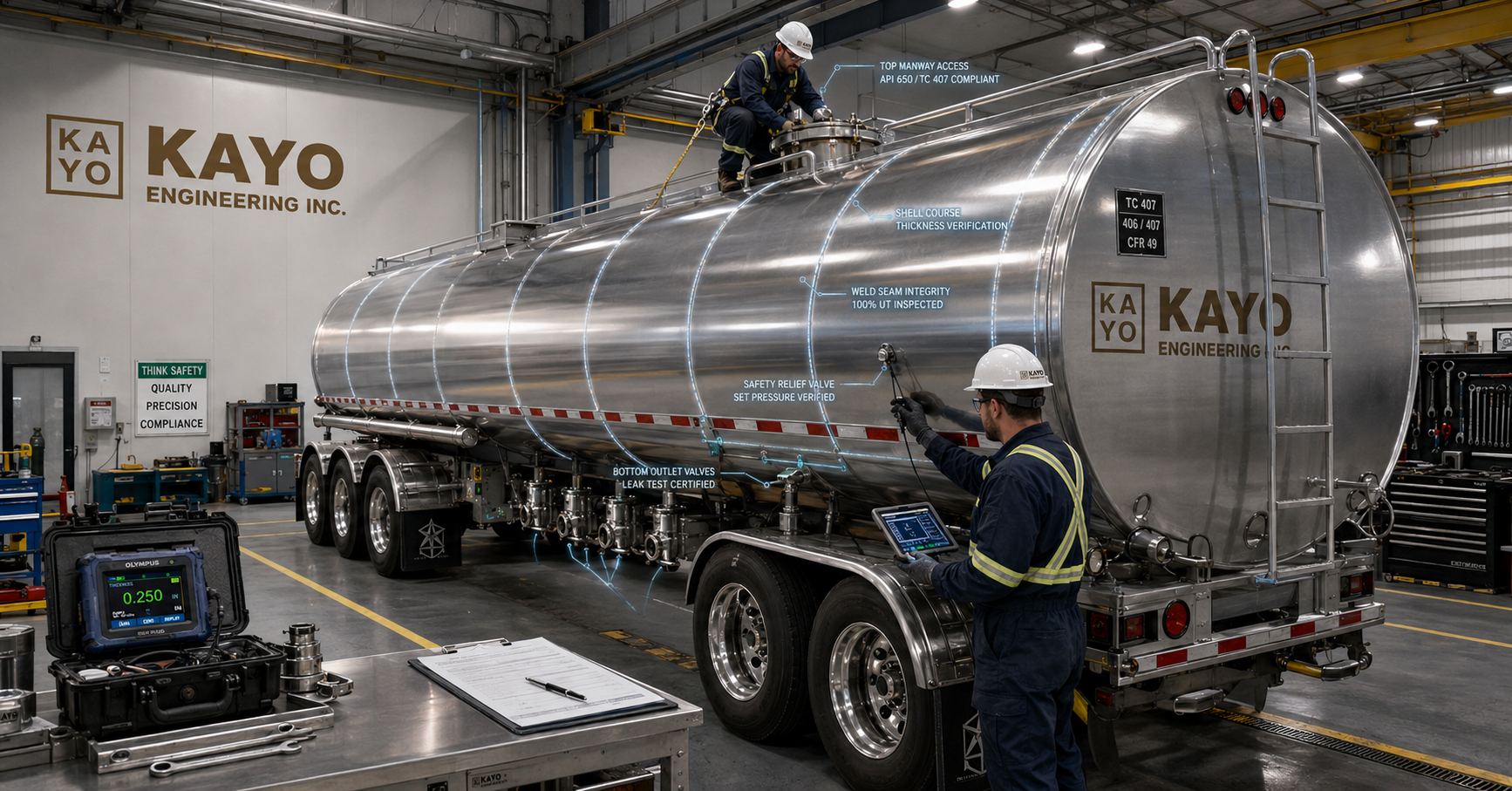
The Ultimate Guide to CSA B620 Facility Registration: What You Need to Know Before You Start
Navigating Transport Canada’s strict legal requirements for manufacturing, assembling, or repairing highway tanks often leads to costly delays and compliance
Finite Element Analysis for Complex Geometries: The Ultimate Guide
Standard code calculations form the absolute foundation of mechanical engineering. Governing bodies, such as ASME and CSA, provide highly reliable
The Ultimate Guide to Securing a Canadian Registration Number (CRN) Without the Headaches
Introduction: Why CRN Approval Matters For OEMs, EPC contractors, manufacturers, and industrial facility owners, getting pressure equipment into service in